

1688 vs Alibaba: Should You Switch from Alibaba to 1688? (Price, Risks & Hidden Costs)
If you’re sourcing products from China, you’ve probably asked:
Should I buy from Alibaba or 1688?
Short answer:
- If you’re a beginner, Alibaba is usually easier and safer.
- If you’re trying to lower costs and improve margins, 1688 often wins.
But price alone doesn’t tell the whole story.
Many importers focus only on unit price and miss something much more important:
Sometimes a product that looks 30% cheaper on 1688 may only save you 10% after shipping, inspection, and agent fees.
Other times, sourcing through 1688 can dramatically increase your margins.
The key is knowing when to use each platform.
Table of Contents
Quick Comparison: 1688 vs Alibaba
| Feature | Alibaba | 1688 |
|---|---|---|
| Target Buyer | International importers | Domestic China buyers |
| Language | English-friendly | Chinese |
| Prices | Higher | Lower |
| MOQ | Often higher | Often lower |
| Payment | Easy | Harder overseas |
| Shipping | International-ready | Domestic only |
| Supplier Access | Often trading companies | More factories |
| Best For | Beginners | Experienced importers |
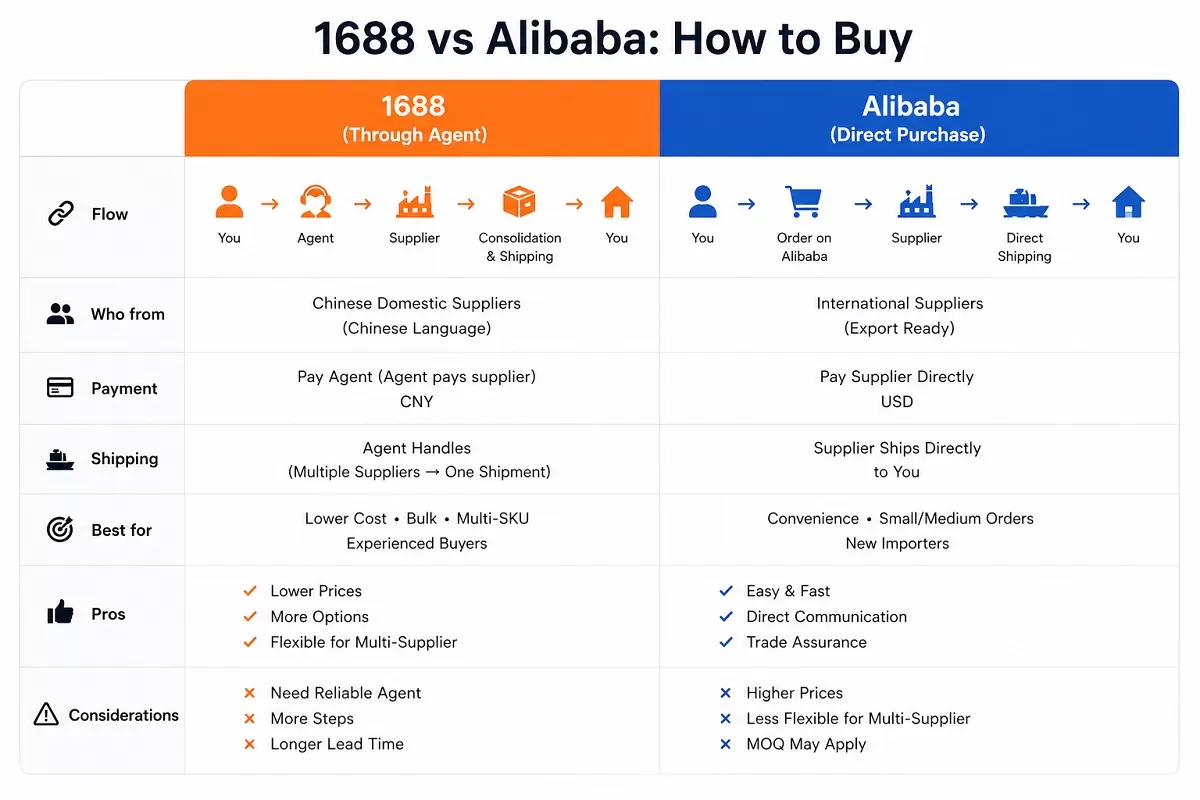
Why 1688 Is Often 20–30% Cheaper?
This is where many buyers get interested.
A major reason 1688 prices are lower:
You’re often cutting out the middleman.
Many suppliers on Alibaba are trading companies.
In some cases, those same trading companies source from factories listed on 1688.
That means when buying on Alibaba, you may pay:
- Factory price
- Trading company markup
- Export markup
On 1688 you’re often seeing closer-to-local pricing.
That is why some products can be 20–30% cheaper, sometimes even more.
1688 vs Alibaba Price Example
| Product | Alibaba | 1688 | Difference |
|---|---|---|---|
| Phone stand | $1.10 | $0.68 | 38% |
| Pet bowl | $2.50 | $1.72 | 31% |
| Yoga mat | $3.20 | $2.10 | 34% |
Looks obvious, right?
Not so fast.
1688 Product Listed Is Not Landed Cost
This is where many beginners make mistakes.
Real import cost is:
Landed Cost = Product Cost + Domestic Freight + Inspection + Agent Fees + International Shipping
A lower unit price does not always mean lower total cost.
Hidden costs on 1688 may include:
- Domestic shipping inside China
- Warehouse receiving fees
- Quality inspection fees
- Consolidation costs
- Export freight
- Sourcing agent service fees
Sometimes 1688 still wins.
Sometimes Alibaba’s all-in pricing is cheaper overall.
That depends on order size.
When Alibaba Can Actually Be Better?
This surprises people.
Sometimes Alibaba is the better financial choice.
Especially when:
1. You’re just testing a product
Suppliers may offer:
- low MOQs
- samples
- DDP shipping
- easier negotiations
Less hassle.
2. You need custom private label products
Alibaba suppliers are often more used to:
- packaging customization
- logo printing
- compliance paperwork
- exporting to Amazon FBA
That matters.
3. You want Trade Assurance protection
For beginners, that protection can be worth paying more.
Sometimes paying 10% more reduces much larger risks. With Trade Assurance, you may have more protection if products arrive late, don’t meet agreed quality standards, or the order doesn’t match what was promised.
When you’re still learning how to vet suppliers, that added protection can be worth far more than the price difference.
Where 1688 Really Shines
1. Lower pricing
Obvious advantage.
Especially commodity products.
Very low-cost products where quality standards are not especially demanding
2. Lower MOQs
This surprises many buyers.
Some 1688 suppliers accept very small quantities.
Great for:
- product testing
- boutique owners
- Amazon validation
3. Access to products not even on Alibaba
This is underrated.
Many domestic factories don’t market internationally.
Some products on 1688 — including gray-market or trademark-sensitive items — may not be commonly found on Alibaba
Sometimes that’s where hidden gems are.
The Biggest Hidden Risk on 1688
Buying from 1688 is often less about finding lower prices — and more about managing added complexity.
Before replacing Alibaba with 1688, there are fivecritical questions worth asking.
How to overcome Language barrier?
Language can be a bigger challenge on 1688 than many buyers expect. Product listings, supplier communication, and even search results often work best in Chinese, and translation 1688 to English tools don’t always capture technical details accurately. Small misunderstandings can turn into quality issues or ordering mistakes, which is why many overseas buyers use a sourcing agent to help bridge that gap.
Is the 1688 Product Really the Same Quality With Alibaba?
Many buyers assume if a product looks identical, it must be identical.
Not always.
Some products made for domestic markets may be produced to different quality standards than export products.
- Same appearance.
- Different materials.
- Different specs.
- Different durability.
That doesn’t mean 1688 quality is lower across the board.
But it does mean supplier verification and clear quality specifications matter.
A cheaper price means very little if the product fails quality requirements.
How to avoid IP and counterfeit risk?
This matters.
1688 has more gray-market products.
If you resell products online, you may not even realize a product sourced from 1688 could involve trademark or IP issues until problems arise.
How Will the Goods Be Exported?
This is huge.
Most 1688 suppliers only deliver inside China.
Their job often ends there.
You still need:
- export handling
- freight forwarding
- customs clearance
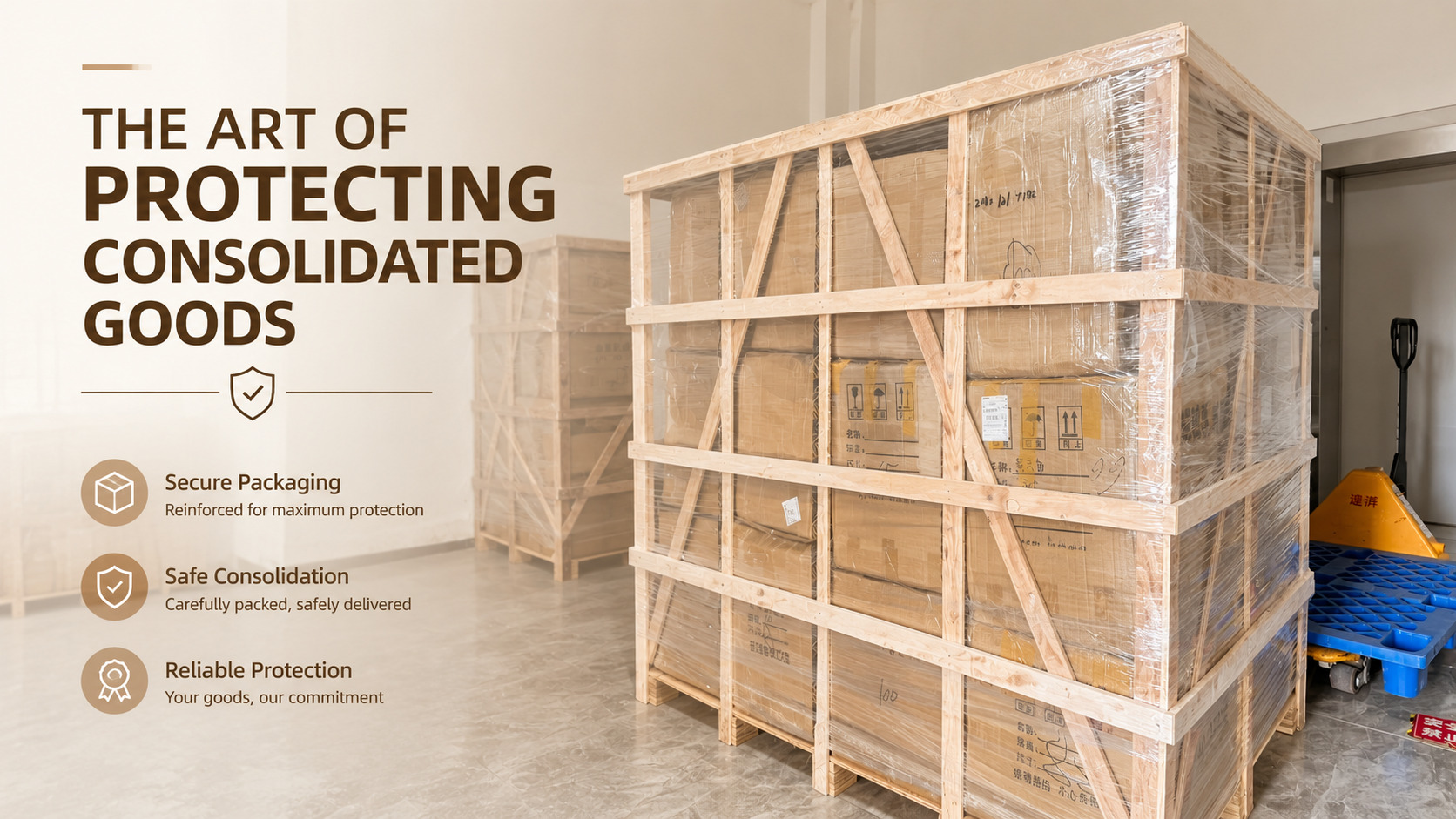
This is why many importers use sourcing agents. If you already have your own freight forwarder, you may only need a consolidation agent to collect goods from different suppliers, combine everything in one place, and then hand the shipment over to your forwarder.
Are all suppliers on 1688 factories?
No — not all 1688 suppliers are factories. While 1688 often has more factory-direct opportunities than Alibaba, the platform also includes trading companies, wholesalers, distributors, and domestic resellers.
Some suppliers are true manufacturers, while others may source from factories and resell products. That’s why supplier verification still matters when sourcing on 1688.
Should You Use a 1688 Sourcing Agent?
For many overseas buyers:
Yes.
Especially if you’re using multiple suppliers.
An agent can help with:
- supplier communication
- price negotiation
- quality inspections
- order consolidation
- export shipping
For many overseas buyers, especially when dealing with multiple suppliers or low-MOQ multi-SKU orders, the answer is often yes. A 1688 sourcing agent can help with factory verification, supplier communication, consolidation, inspections, and export logistics.
Can You Find a Reliable Sourcing Agent?
If a sourcing agent handles the order, receives payment, and places the purchase order on your behalf…
they have effectively become part of your supply chain.
In some ways, they become your supplier.
That makes choosing the right agent just as important as choosing the right factory.
Ask:
- Who receives your payment?
- Who places the order?
- Who is responsible if something goes wrong?
Those questions matter.
My Practical Recommendation: Alibaba vs 1688
I usually suggest this 3-stage approach:
Stage 1 — Start with Alibaba
Use it to validate products.
Lower complexity.
Lower risk.
Stage 2 — Move to 1688
Once product demand is proven:
Reduce costs.
Improve margins.
Scale.
Stage 3 — Combine 1688 + Consolidation
This is what experienced importers often do.
Source on 1688.
Consolidate products.
Ship together.
Optimize landed costs.
This is where serious savings happen.
So…Alibaba vs 1688, Which Is Better?
Choose Alibaba if:
Use Alibaba if you want:
- Easier sourcing
- Better protection
- Custom products
- Beginner-friendly importing
Choose 1688 if:
Use 1688 if you want:
- Lower product costs
- Better margins
- Factory-direct sourcing
- More control
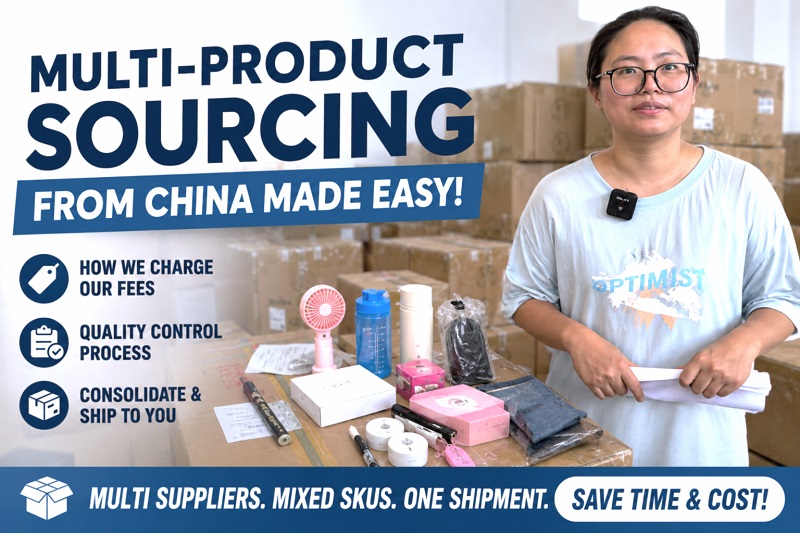
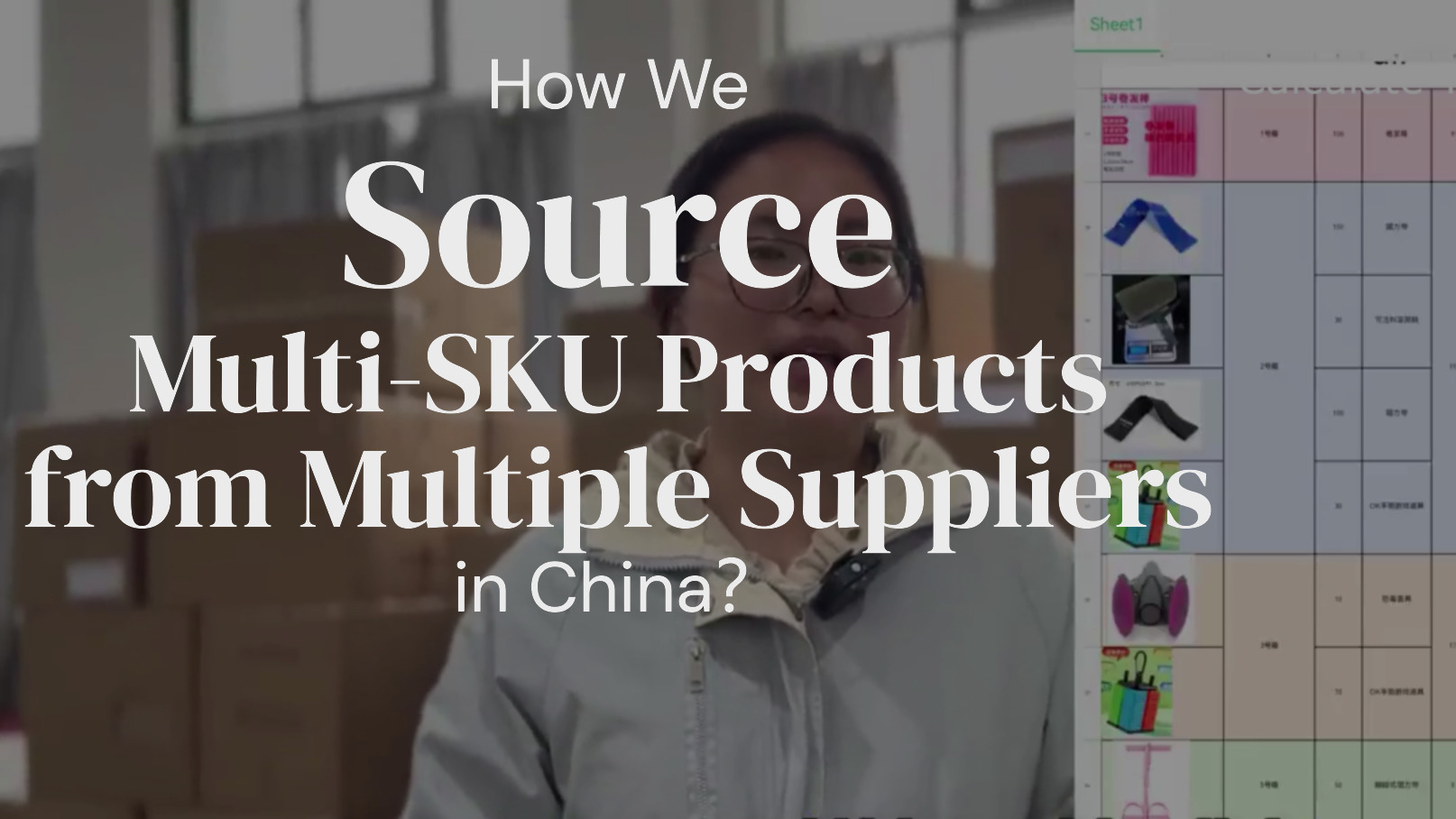
Another big reason buyers choose 1688 is when they need multiple SKUs with low MOQs. Instead of managing many small orders from different suppliers, it’s often easier to source through a 1688 agent, consolidate everything together, lower costs, and make purchasing much more efficient.
Best Strategy?
Use both.
Alibaba helps you start.
1688 helps you scale.
That’s what many experienced importers do.
Final Thoughts on Choosing Between 1688 and Alibaba
1688 can lower product costs, especially for multi-SKU low-MOQ sourcing, but only works well when you manage hidden costs, logistics, and supplier risk. Many experienced importers end up using Alibaba to start and 1688 to scale.
If your sourcing involves multiple SKUs and low MOQs, 1688 can be a powerful option when paired with proper consolidation. That’s where Supplyia can help—by coordinating suppliers, consolidating orders, arranging inspections, and helping make multi-SKU sourcing easier and more cost-efficient.
FAQ:
Is 1688 cheaper than Alibaba?
Usually yes — 1688 often offers lower product prices, sometimes 20–30% lower than Alibaba. But the real comparison should be based on landed cost, not unit price alone. Once you factor in domestic freight, inspections, consolidation, and shipping, actual savings can vary. For multi-SKU sourcing, 1688 can often become even more cost-effective when purchases are properly consolidated.
Can foreigners buy from 1688?
Yes, though many buyers use sourcing agents for payments, communication and logistics. check here for 1688 buying guide.
Is 1688 better than Alibaba?
Not necessarily — they serve different purposes. Alibaba is often better for beginners, custom products, and simpler importing, while 1688 can be better for lower costs, multi-SKU sourcing, and improving margins. Many experienced importers use Alibaba to start and 1688 to scale.
Is product quality on 1688 the same as Alibaba?
Not always. Some products made for domestic markets may use different materials or standards than export versions, so supplier verification and quality checks matter.

[…] 1688 […]
[…] other words, sometimes, the same suppliers you find on Alibaba and 1688.com will offer higher prices for foreign […]
[…] 1688.com is a catalog of Chinese wholesale suppliers under the Alibaba Group. 1688.com is almost the same as Alibaba.com, except that 1688.com mainly caters to Chinese companies. […]
[…] it means: Smaller retailers may order through online wholesale platforms like Alibaba, 1688, Faire, or Amazon […]
[…] 1688 vs Alibaba Depends what you […]