
Alibaba Shipping Methods: Do I have to pay import tax from Alibaba?
Shipping from Alibaba can be cost-effective and efficient with the right approach. This guide helps you navigate shipping methods, reduce costs, and ensure safe delivery.
Key goals include minimizing expenses, ensuring timely delivery, and maintaining product safety.
Key Considerations: Balance cost, speed, and safety when choosing a shipping method. Communicate clearly with suppliers to avoid surprises.
Table of Contents
Understanding Alibaba Shipping Costs
Shipping costs from Alibaba depend on several factors:
- 🌍Distance: Longer distances increase costs, especially for heavy goods.
- 📏Order Quantity: Low quantities shipped by air are expensive per unit. Larger orders (500+ units) reduce per-unit costs.
- 🚚Shipping Method: Choosing the wrong method (e.g., air for bulky items) can inflate costs.
- 💻Platform Pricing: Alibaba’s online shipping quotes are often higher than offline quotes negotiated directly with suppliers or freight forwarders.
Tip: Use tools like Freightos to estimate real-time shipping costs.
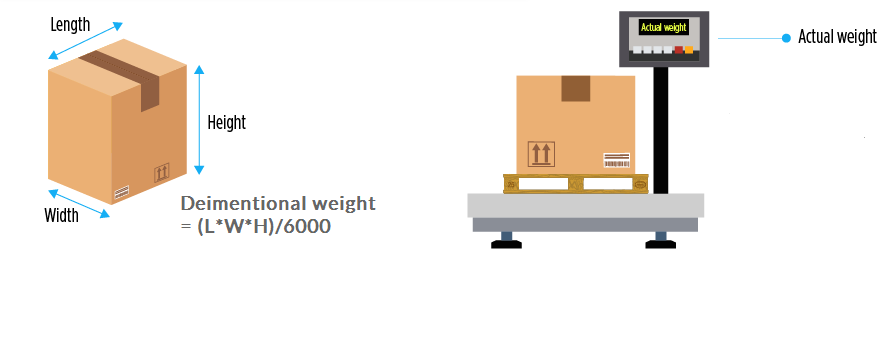
Dimensional vs. Actual Weight
Shipping costs are based on billable weight, which is the greater of actual weight (product weight including packaging) or dimensional weight (based on package volume).
- ⚖️Sea Freight: Dimensional weight = package volume (cm³) / 6000
- ✈️Air Freight: Dimensional weight = package volume (cm³) / 5000
Example: A package weighing 10kg but occupying 0.1m³ (100,000 cm³) has a dimensional weight of 16.67kg for air freight (100,000 / 5000). The billable weight is 16.67kg.
Optimize packaging to reduce volume and save costs. Discuss compact packaging options with your supplier.
Common Alibaba Shipping Methods:
Alibaba offers various shipping methods, each with trade-offs in cost, speed, and suitability. Transit times and costs vary based on your location and order size.
1. Regular Post/Express
Regular post (e.g., China Post, Hong Kong Post) is the cheapest option for small shipments like samples (under 2kg). Transit time is 15–35 days.
- Pros: Low cost, trackable online.
- Cons: Slow, unreliable tracking, higher risk of loss. Not recommended for valuable goods.
Use Case: Ideal for dropshipping or low-value samples.
2. Air Express
Air express (e.g., DHL, UPS, FedEx) offers fast delivery (3–5 days) with reliable tracking and door-to-door service.
- Pros: Fast, safe, seamless delivery.
- Cons: Expensive ($5–$15/kg), restrictions on product types (e.g., hazardous materials).
Use Case: Best for small, high-value orders needing quick delivery.
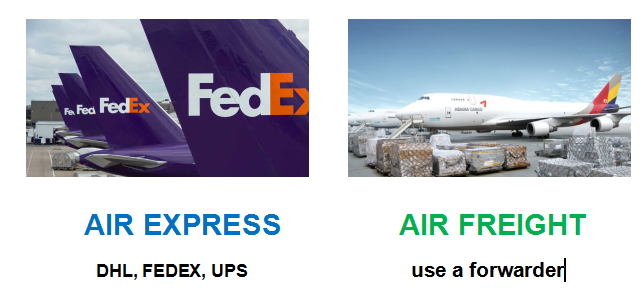
3. Air Freight
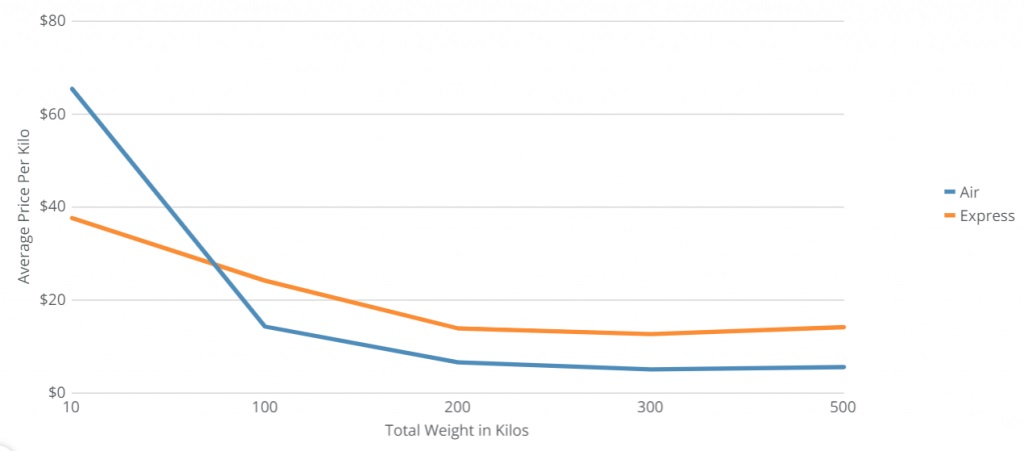
Air freight is suitable for medium-sized shipments (e.g., 100kg) and is cheaper than air express ($4–$8/kg). Transit time is 5–10 days.
- Pros: 20% cheaper than express, good for medium-weight cargo, secure.
- Cons: Minimum weight requirements, potential weather delays.
Use Case: Ideal for time-sensitive shipments too heavy for express.
4. Sea Freight
Sea freight is the most cost-effective for large shipments, with options for FCL (Full Container Load) or LCL (Less than Container Load). Transit time is 30–60 days.
- Pros: Lowest cost ($2–$2.5/kg for LCL, $3,000–$5,000 per container for FCL), no size/weight limits, eco-friendly.
- Cons: Slow, delays during peak seasons.
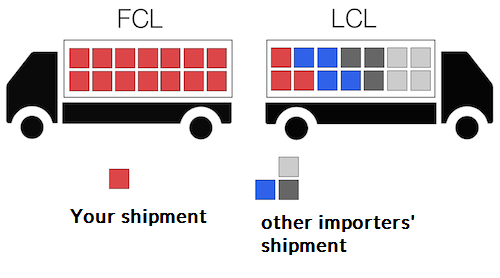
FCL vs. LCL:
- FCL: Full container for your goods. Cheaper per unit, safer, faster processing. Best for cargo over 15cbm.
- LCL: Shared container with other buyers’ goods. Cost-effective for 1–8cbm shipments.
Tip: Choose FCL for large orders to save costs and reduce handling risks.
5. Rail Shipping
Rail shipping is faster than sea freight (15–30 days) and suitable for shipments to Europe or Asia.
- Pros: Faster than sea, large capacity.
- Cons: 10–30% more expensive than sea, limited routes, less flexible.
Use Case: Good for mid-sized shipments to specific regions like Europe.
Comparison of Alibaba Shipping Methods:
| Shipping Method | Pros | Cons | Port to Port | Door to Door | Price |
|---|---|---|---|---|---|
| Express | Fastest, safe, door-to-door | High cost, product restrictions | – | 2–5 days | $5–$15/kg |
| Air Freight | Fast, 20% cheaper than express, secure | High cost, size/weight limits, weather delays | 1–5 days | 4–11 days | $4–$8/kg |
| Sea Freight (LCL) | Cheap, no size/weight limits, eco-friendly | Slow, peak season delays | 14–42 days | 19–47 days | $2–$2.5/kg |
| Sea Freight (FCL) | Cheap, no size/weight limits, eco-friendly | Slow, peak season delays | 14–42 days | 22–50 days | $3,000–$5,000/container |
| Rail Shipping | Faster than sea, large capacity | Higher cost, limited routes | 15–18 days | 20–30 days | Varies |
Do I Have to Pay Import Tax from Alibaba?
The short answer is: it depends, but for most Alibaba orders, you should prepare for the possibility. Whether you pay import from Alibaba Tax depends on three main things: your country, the total value of the order, and the shipping terms (Incoterms) you agreed upon with the seller.
1. Check Your “Incoterms”
This is the most important part of your Alibaba contract. It determines who is responsible for the tax.
DDP (Delivered Duty Paid): The seller pays. This is the “all-inclusive” option. The price you pay on Alibaba includes shipping, customs clearance, and all import taxes. The package shows up at your door with nothing more to pay.
2. DAP / CIF / FOB:
You pay. The seller only handles getting the goods to your country or a specific port. When the package hits customs, the courier (FedEx, DHL, UPS) or a customs broker will contact you to pay the tax before they release the package.
How Much is the Tax?
If you are responsible for the tax, the amount is usually a percentage of the “Landed Cost” (Value of goods + Shipping + Insurance).
Standard Duty: Usually 0% to 10% depending on the product’s HS Code (a global classification code for products).
3. Understanding Alibaba Shipping Incoterms
Incoterms define who pays for shipping, insurance, and customs at each stage. Common Incoterms on Alibaba include:
| Incoterm | Seller’s Responsibility | Buyer’s Responsibility |
|---|---|---|
| EXW (Ex Works) | Production and packaging | All shipping, customs, and delivery |
| FOB (Free on Board) | Delivery to port | Ocean freight, customs, and delivery |
| CIF (Cost, Insurance, Freight) | Shipping to destination port, insurance | Customs clearance, final delivery |
| DDP (Delivered Duty Paid) | All costs to buyer’s door | None |
Tip: Specify Incoterms (e.g., “FOB Shanghai”) when requesting quotes to avoid unexpected costs.
Communicating with Alibaba Suppliers
Effective communication with suppliers ensures smooth shipping.
Use these tips:
- 📧Ask Clear Questions: Request a breakdown of shipping costs, transit times, and packaging options.
- ✅Verify Reliability: Check Trade Assurance status, supplier reviews, and response times.
- 📜Confirm in Writing: Document agreements on shipping methods, Incoterms, and costs.
Sample Quote Request Email:
Dear [Supplier Name],
I’m interested in shipping to [destination]. Please provide quotes for air freight and sea freight (LCL/FCL) under FOB terms, including estimated transit times and insurance options. Can you also confirm packaging details to minimize dimensional weight?
Best regards,
[Your Name]
Shipping Insurance
🛡️Always purchase shipping insurance to protect against loss or damage. Typical costs are $50–$100, calculated as:
Insurance Cost ≈ Value of Goods × 1.1 × 0.1%–0.3%
Insurance covers cargo value but not lost sales or development costs. Ask your freight forwarder for exact rates.
Tip: For fragile items, request sturdy packaging to reduce damage risks.
Tracking and Handling Issues
Track shipments using the tracking number provided by your supplier. Check status on platforms like 17Track.
If Issues Arise:
- ⏰Delays: Contact the supplier or freight forwarder. Check tracking for updates.
- 📦Damage/Loss: File a claim with the freight forwarder or insurer, providing photos and documentation.
- 📞Escalate: Contact Alibaba’s customer service if the supplier is unresponsive.
Note: Cheaper shipping channels may lead to delays. Choose reliable methods for critical shipments.
Alibaba Agent:
Shipping from Alibaba requires balancing cost, speed, and safety. Start with supplier-arranged shipping for small orders, then explore freight forwarders for larger shipments. Use Alibaba’s Freight Center for convenience and consult experts for complex needs.
Alibaba agent” typically refer to professional intermediaries who assist buyers with product sourcing, quality control, logistics, and payments. These services help mitigate risks like scams, poor quality, or shipping delays, particularly for dropshipping, wholesale, or bulk orders.
Agents are often third-party providers listed on Alibaba’s platform, charging fees based on order value (e.g., 3-5% for payment handling). So, if you want to find a good way to import from Alibaba, you can try to find a Alibaba agent like supplyia.
Resources:


Is it possible to purchase an item from a wholesale supplier and then have the item sent to a logistic company that functions as a warehouse?In other words, if there was an order, would the company take action to fulfill the order and deliver it to the customer?
are you asking for dropshipping?