FCL Consolidation from China: How It Works, Costs, and Real Insights from Importers
If you’re sourcing products from multiple suppliers in China, shipping can quickly become complicated — and expensive.
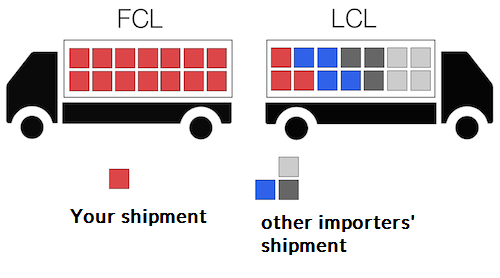
Many importers start with LCL (Less than Container Load), only to realize later that it comes with hidden fees, delays, and a higher risk of damage.
That’s why more experienced buyers eventually move to FCL consolidation — a more efficient way to combine shipments, reduce costs, and gain better control over logistics.
In this guide, we’ll walk through how FCL consolidation works, what it costs, and what real importers have learned from experience.
FCL Consolidation Inquiry we received:
We have a list of 77 components that we purchase to 22 Chinese suppliers that we want to pack jointly on 1 container (or partial). We also have a list of potential products to purchase in China that we appreciate help on procurement.
Table of Contents
What is FCL Consolidation?
FCL (Full Container Load) consolidation is a shipping method where you source products from multiple suppliers, send them to a single warehouse in China, and combine everything into one container for shipment.
Instead of managing multiple small shipments, everything is centralized. This helps reduce handling, simplify coordination, and improve cost efficiency.
For many growing businesses, this becomes a standard part of the importing process.
How FCL Consolidation from China Works?
1. Order from Multiple Suppliers
It’s common to work with different factories for different products, such as packaging, accessories, or components.
2. Ship Goods to a Consolidation Warehouse
Each supplier sends their goods to a central warehouse, typically located in major logistics hubs like Shenzhen, Guangzhou, or Yiwu.
3. Inspection and Quality Check
Before consolidation, goods are checked for quantity, product quality, and packaging condition.
Many experienced importers emphasize that this step is essential, as factory photos alone are often not reliable.
4. Repacking and Optimization
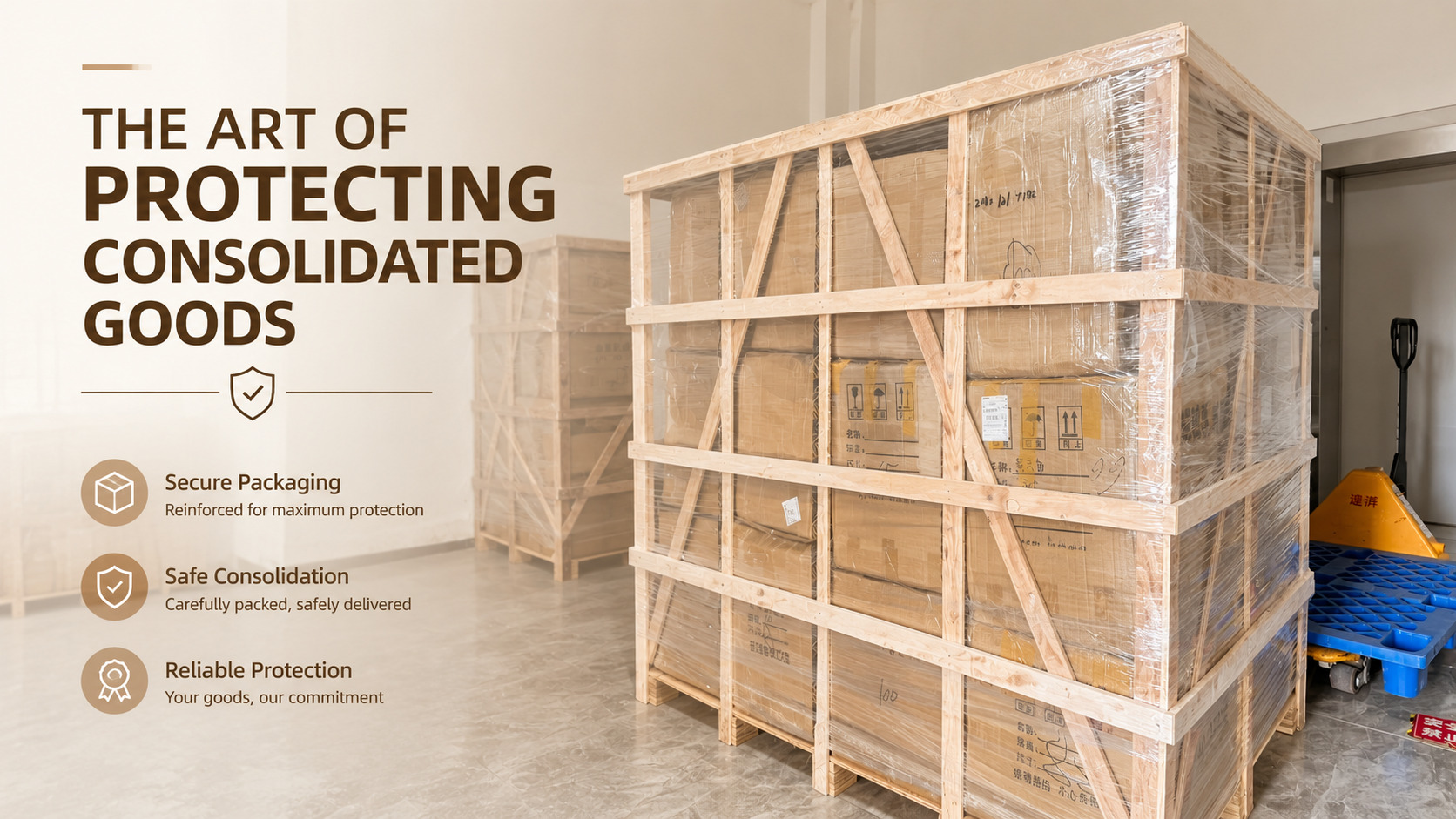
Cartons may be reinforced, resized, or palletized to improve container space usage and reduce the risk of damage.
5. Container Loading
All goods are loaded into a full container (20FT or 40HQ), depending on volume.
6. Customs Clearance and Shipping
The shipment is exported as one FCL container and transported to the destination port.
Cost Breakdown: Is It Really Cheaper?
Typical FCL consolidation costs include:
- Domestic shipping (supplier to warehouse)
- Warehouse handling fees
- Inspection fees
- Repacking or palletizing
- Container loading
- Ocean freight
- Destination charges
Once your shipment reaches around 15–20 CBM, FCL consolidation often becomes more cost-effective than LCL.
This is mainly because LCL shipments tend to include multiple layers of charges, especially at the destination port.
FCL, on the other hand, usually offers more predictable pricing and a lower cost per unit.
FCL Consolidation vs LCL Shipping
| Factor | FCL Consolidation | LCL Shipping |
|---|---|---|
| Cost per CBM | Lower (medium–large volume) | Higher |
| Handling risk | Lower | Higher |
| Transit time | Faster | Slower |
| Control | Higher | Limited |
What Real Importers Have Learned?
Most experienced buyers don’t rely on just one supplier. It’s common to source from multiple factories, which makes consolidation a practical necessity.
Another common takeaway is that many importers rely on LCL longer than they should. Over time, they realize that consolidating shipments earlier could have saved both money and effort.
Common Challenges (and How to Avoid Them)
Supplier Delays
One delayed supplier can hold up the entire shipment.
-Tip: Align production timelines early or work with someone who can coordinate suppliers.
Lack of Quality Inspection
Skipping inspection can lead to incorrect or damaged goods.
-Tip: Always verify products before consolidation.
Hidden Costs
Unexpected fees may include storage, handling, or palletization.
-Tip: Confirm all charges in advance, including free storage time.
Limited Support from Freight Forwarders
Freight forwarders typically focus on transportation, not supplier coordination or quality control.
-Tip: For more complex shipments, additional support may be needed.
FCL vs LCL from China Shipping: Pros, Cons, and When to Choose Each
| Factor | FCL (Full Container Load) | LCL (Less than Container Load) |
|---|---|---|
| Best Volume Range | 15–28+ CBM (or near full container) | 1–15 CBM |
| Cost per CBM | Lower (more cost-efficient at scale) | Higher (especially with destination fees) |
| Total Cost Predictability | More stable and predictable | Less predictable (multiple extra charges) |
| Handling Risk | Lower (fewer touchpoints) | Higher (cargo is handled multiple times) |
| Transit Time | Faster (direct shipment) | Slower (needs consolidation & deconsolidation) |
| Flexibility | Lower (requires planning and volume) | Higher (good for small or frequent shipments) |
| Damage Risk | Lower | Higher |
| Operational Complexity | Higher (requires coordination or agent) | Lower (simpler to start) |
| Ideal For | Multiple suppliers Growing businesses Stable supply chain | Small orders Testing products Early-stage importers |
| Key Advantages | Lower unit cost Better cargo protection Faster transit More control | No need to fill container Lower upfront commitment Flexible shipping frequency |
| Key Disadvantages | Requires higher volume Needs coordination Higher upfront cost | Hidden fees Higher damage risk Longer transit time |
Rule of Thumb
- If your shipment is below 10–12 CBM, LCL is usually more practical.
- Between 12–15 CBM, it depends on pricing and urgency.
- Above 15–20 CBM, FCL (or FCL consolidation) is often the more cost-effective and safer choice.
Final Thoughts
FCL consolidation is one of the most practical ways to streamline your importing process as your business grows.
It allows you to combine flexible sourcing with efficient shipping, helping reduce costs while improving overall control.
For many importers, it’s not a question of if, but when to make the switch.
China purchasing and consolidation service:
If you’re sourcing from multiple suppliers and looking for a more efficient way to manage shipping, FCL consolidation is worth considering.
Supplyia can support you throughout the entire China FCL consolidation process — from sourcing products and coordinating suppliers, to quality inspection, consolidation, and container loading.
To keep things flexible and transparent, once all goods are collected, you can choose to have your shipment delivered directly to your address or handed over to your own freight forwarder.
This allows you to compare shipping options and choose the most cost-effective solution while keeping full control of your logistics.
FAQ:
Reliable fcl container shipping options imports china canada us?
“Reliable FCL shipping from China to Canada and the U.S., with 20ft/40ft containers, top carriers (Maersk, COSCO, DHL, Kuehne + Nagel), DDP services, stable 9–13 day transit, full shipment visibility, and if you need to consolidate a full container, Supplyia can help gather your goods.”